Redmi
Redmi Note 3 (MediaTek)
Original Redmi Note 3 upgrades the large-screen series with Helio X10, Full HD IPS, a metal rear and fingerprint reader. Memory variants, regional radios, sealed battery and absent microSD are kept separate from Snapdragon hardware.
Sign into save this entry.
- Platform
- Android smartphone
- Operating system
- Android 5.0.2 / MIUI 7 at introduction
Overview
Original Redmi Note 3 upgrades the large-screen series with Helio X10, Full HD IPS, a metal rear and fingerprint reader. Memory variants, regional radios, sealed battery and absent microSD are kept separate from Snapdragon hardware.
Period and variants
The Redmi Note 3 announced on 24 November 2015 initially uses Helio X10: eight 2.0 GHz Cortex-A53 cores and PowerVR G6200. A metal rear, rear fingerprint reader and larger battery distinguish it from Note 2. Standard 2 GB / 16 GB and higher 3 GB / 32 GB branches have original GPU clock listings of 550 and 700 MHz; storage does not imply the Note 2 Prime’s 2.2 GHz CPU. The 2016 Snapdragon 650 version is recorded separately.
Unibody tradeoffs
Contemporary figures are approximately 150 × 76 × 8.7 mm and 164 g; the announcement specifies 8.65 mm depth. Firsthand inspection finds plastic antenna caps around the metal rear. Battery replacement is not a user operation, and the MediaTek units lack microSD. Front capacitive keys, right-side buttons, top native audio and IR, bottom microUSB 2.0 / OTG and a rear mono speaker preserve familiar controls.
Radios and software
The original MediaTek dual-network table lists FDD-LTE 1/3/7 and TD-LTE 38/39/40/41, with regional WCDMA/TD-SCDMA/GSM. Snapdragon all-network CDMA bands stay separate. A selected LTE SIM usually leaves the other on GSM. MIUI 7 / Android 5.0.2, Bluetooth 4.1, dual-band ac Wi-Fi, GPS/GLONASS/BeiDou and Miracast follow contemporary MediaTek reviews. The 5.5-inch Full HD IPS has approximately 401–403 ppi in different reports; a universal glass brand remains open.
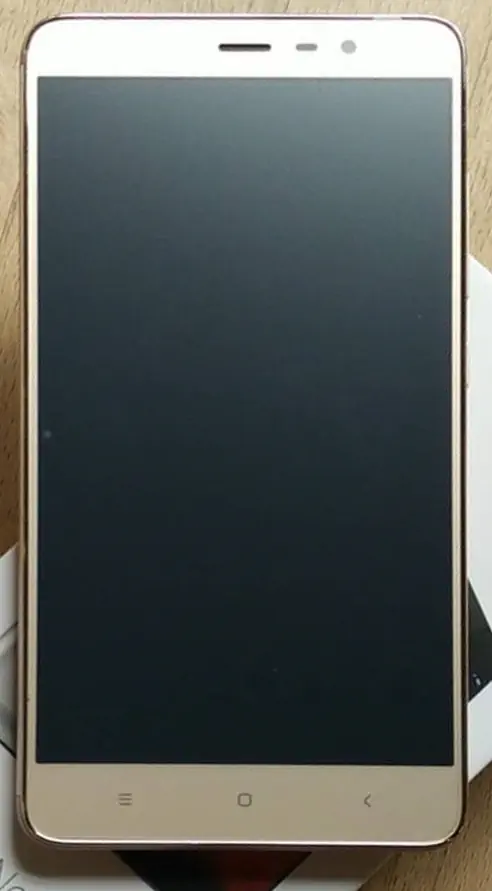
The 13 MP f/2.2 PDAF rear uses dual-tone LED, with a 5 MP f/2.0 front and reviewed 1080p30 recording. The later combined maker page’s 120 fps wording is not assigned to this MediaTek branch without retail proof. Original 4000 / 4050 mAh typical capacity definitions remain distinct. Conflicting firsthand fast-charging reports leave the exact standard and bundle unresolved. The photograph’s source explicitly identifies MTK and its original clarity is retained.
Sources
- Xiaomi — original Note 3 table with separate MediaTek and Snapdragon branches
- GSMArena — original MediaTek Redmi Note 3 announcement, 24 November 2015
- GSMArena — original MediaTek Redmi Note 3 introduction and reviewed configuration
- GSMArena — original MediaTek Redmi Note 3 processor review
- GSMArena — original MediaTek Redmi Note 3 display and connectivity
- Android Authority — Bailey Stein’s original MediaTek Redmi Note 3 review, 28 December 2015
Image credits
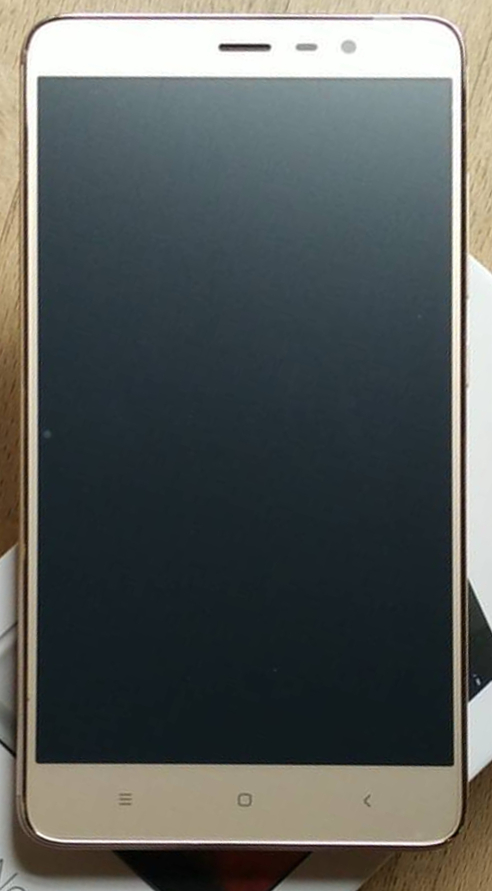
Gold Redmi Note 3 front; source explicitly identifies MTK, original clarity retained — Vernon Chan, CC BY 2.0; source file unchanged by this archive.

Optimized display images on this page have been proportionally resized (maximum dimension 1600 px) and compressed to WebP, without cropping or retouching. Statements above about unchanged files refer to the preserved collected originals; attribution, sources and original licenses still apply. Originals: 1.
Images collected from the Internet.