Nokia
8210
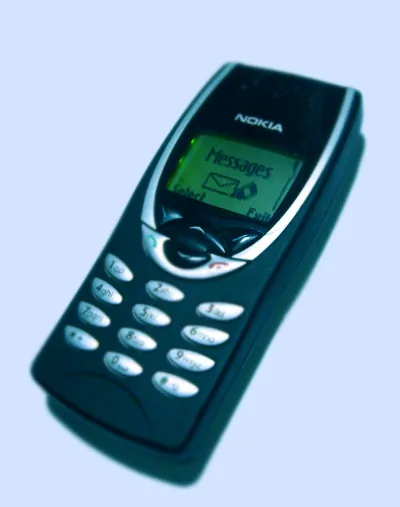
The 8210’s compact body, 79g weight and interchangeable covers reflect the move towards phones as personal accessories in 1999. Infrared transfer and voice dialling also provided practical business functions.
Sign into save this entry.
- Platform
- Nokia feature phone
- Operating system
- Nokia proprietary firmware
At a glance
The 8210’s compact body, 79g weight and interchangeable covers reflect the move towards phones as personal accessories in 1999. Infrared transfer and voice dialling also provided practical business functions.
Dates and versions
The 8210 appeared at a Kenzo-related launch in Paris on 8 October 1999. Contemporary reporting expected European supply in November. An exact first retail day has not been established, so the date field is empty. This is the original GSM phone, rather than a later 4G namesake.
Use and collecting
It uses a Mini-SIM and GSM 900/1800, with an interchangeable Xpress-on front cover. The internal phonebook holds 250 names and numbers; SIM capacity is separate and card dependent. Eight numbers can have voice-dial tags, and the infrared port transfers supported data between compatible devices.
The manual lists Memory, Snake, Logic and Rotation. Nokia’s NSM-3 service documentation identifies the standard BLB-2 as a 650mAh lithium-ion battery; later high-capacity replacements are not treated as the original specification. Precise pixel resolution, CPU and RAM remain unfilled pending direct evidence.
References
- Nokia 8210 User Guide — 9352346, Issue 4 (2000)
- Nokia NSM-3 service manual — BLB-2 standard battery, page 331
- Kenzo tiene a battesimo il nuovo Nokia 8210 — launch report, 8 October 1999
- Mobile Phone Museum — Nokia 8210 collection record
Image credit
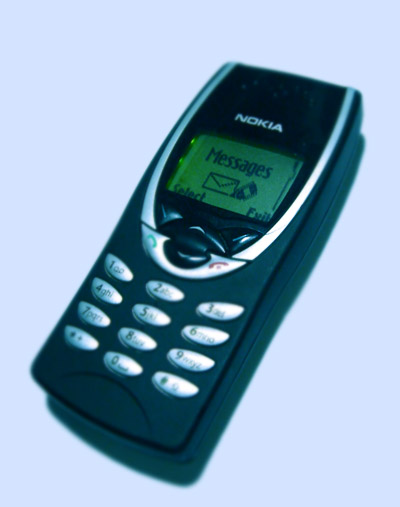
Ultravisitor — Nokia8210.jpg · CC BY-SA 3.0. Original Commons file; no crop, resize or retouch by VKE Retro. This image remains available under the same licence.

Optimized display images on this page have been proportionally resized (maximum dimension 1600 px) and compressed to WebP, without cropping or retouching. Statements above about unchanged files refer to the preserved collected originals; attribution, sources and original licenses still apply. Originals: 1.
Images collected from the Internet.