Nokia
6310i
Nokia’s 2002 tri-band GSM 6310i combines a blue-backlit monochrome screen, Java, GPRS, Bluetooth and infrared with a classic keypad. Guide-specific contact limits, replaceable packs and charging times are recorded separately.
Sign into save this entry.
- Platform
- GSM feature phone
- Operating system
- Nokia proprietary menu firmware with Java applications
Overview
Nokia’s 2002 tri-band GSM 6310i combines a blue-backlit monochrome screen, Java, GPRS, Bluetooth and infrared with a classic keypad. Guide-specific contact limits, replaceable packs and charging times are recorded separately.
Period and variants
Announced on 12 March 2002, the 6310i retains a physical keypad, external antenna and replaceable battery. Added GSM 1900 and Java distinguish it from the original 6310. Contemporary blue screen/keypad lighting remains monochrome; the original service figure specifies a 96 × 65 active display area. Colour and multimedia features of other phones announced that day are separate.
Connections and Java
Tri-band GSM, GPRS, HSCSD, WAP, infrared and Bluetooth support period communication and computer accessories. The guide describes WML browsing and explicitly excludes HTML pages. PC email software and operator SMS-to-email gateways are distinct from a native POP3 client. Bluetooth audio search can start from the phone; non-audio devices must initiate their connection. Infrared needs clear alignment, preferably within one metre.
Both original guides permit Java installation through WAP or PC Suite, while an early review reported no over-the-air download. The cause and software mapping remain unverified. The international guide’s 128 kB application area plus up to 50 kB dynamic shared space is not handset RAM. Snake II, Space Impact and Bumper are built in; additional Java games and monophonic ringing tones remain separate.
Contacts and battery options
International Issue 3 specifies up to 500 internal contacts, while Americas Issue 1 states 300 in both phone-book and technical tables. SIM contacts separately support up to 250. Multiple fields affect actual capacity; the source difference is retained without inventing its cause. The Americas guide lists 110 g with BPS-2; a contemporary review lists 111 g.
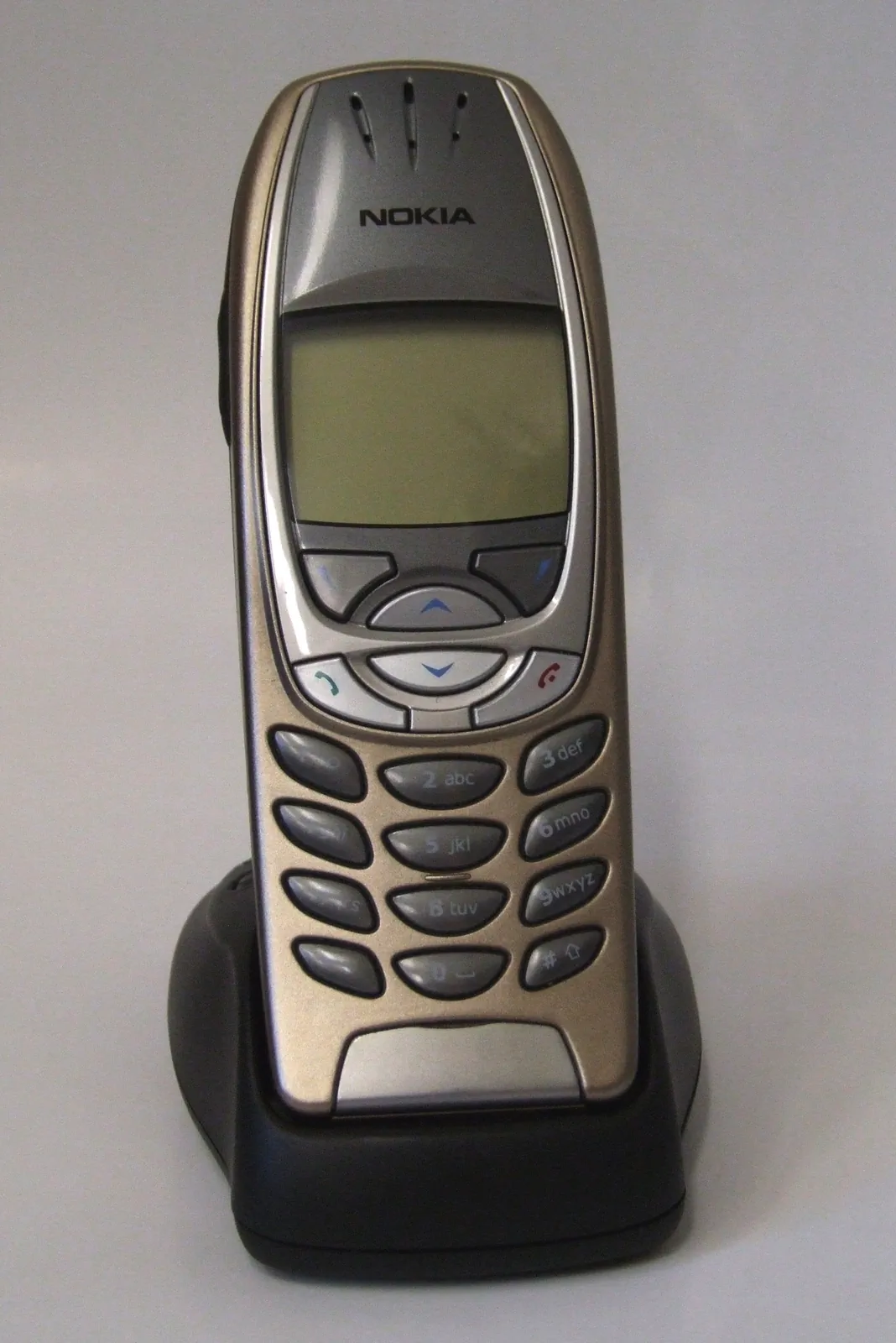
Original Americas tables distinguish BPS-2 1,100 mAh lithium-polymer, BLS-2N 1,050 mAh lithium-ion and BLS-4 1,500 mAh. Endurance and charging depend on the pack and charger. BPS-2/ACP-12 is about 100 minutes in the international guide versus two hours with ACP-12U in the Americas table. The original photograph’s DCH-9 dock identifies the photographed setup without proving universal accessory compatibility.
Sources
- Nokia — original 12 March 2002 announcement, specific 6310i paragraph
- Nokia — original international 6310i user guide, 9354260 Issue 3
- Nokia — original Americas 6310i user guide, 9353761 Issue 1
- What Mobile / The Register — Simon Rockman’s own 16 September 2002 review
- Mobile-Review — own original Russian 6310i review, 23 July 2002
- Nokia — original NPL-1 Baseband System, Figure 12 display active area
Image credits
Nokia 6310i front in the source-identified DCH-9 dock, full original frame — Martinz6492, CC BY-SA 3.0; source file unchanged by this archive.

Optimized display images on this page have been proportionally resized (maximum dimension 1600 px) and compressed to WebP, without cropping or retouching. Statements above about unchanged files refer to the preserved collected originals; attribution, sources and original licenses still apply. Originals: 1.

Images collected from the Internet.