Nokia
6110
Announced in November 1997, Nokia’s GSM 900 6110 combines an 84 × 48 monochrome screen, chameleon finish, infrared and 50 internal contacts. Calendar, Snake, replaceable packs and regional siblings are documented separately.
Sign into save this entry.
- Platform
- GSM feature phone
- Operating system
- Nokia proprietary menu firmware
Overview
Announced in November 1997, Nokia’s GSM 900 6110 combines an 84 × 48 monochrome screen, chameleon finish, infrared and 50 internal contacts. Calendar, Snake, replaceable packs and regional siblings are documented separately.
Period and variants
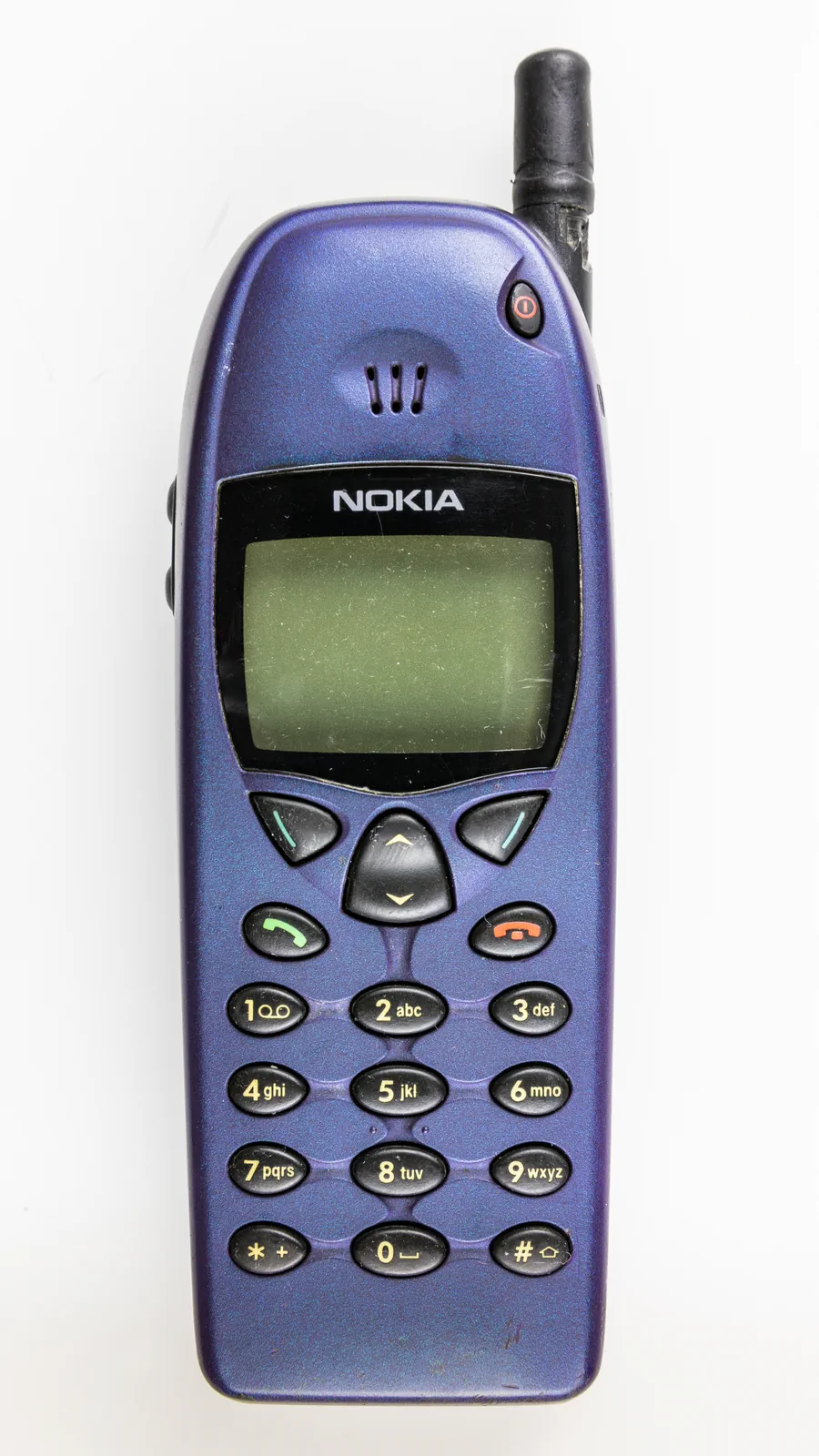
Nokia’s 1997 annual report dates the Beijing 6100-series announcement to 10 November; two contemporary presentation/interview reports corroborate it. The conflicting 18 December date is not adopted. January delivery was a plan, with the 1998 annual report confirming volume deliveries early that year rather than one worldwide first-sale day. A chameleon finish shifts green, blue and purple with the light.
Variants and controls
Original 6110 is GSM 900. The 6130/6138 and 6190 use other bands; the 6150’s dual-band capability is separate. The 2007 6110 Navigator is another smartphone. An 84 × 48 monochrome graphical LCD uses dynamic text sizing. Two softkeys, dedicated Send/End and side volume keys distinguish its controls from the 5110. Display-controller memory is kept separate from unverified handset RAM or CPU figures.
Contacts, calendar and infrared
The original guide specifies 50 internal contacts, plus a separate SIM phone book supporting up to 250. Each entry allows a 16-character name and 30-digit number. Contacts can move between phone and SIM or transfer through infrared. Calendar reminders, calls, meetings and birthdays can be shared by SMS or IR. Text messages allow 160 characters. Snake, Memory and Logic are built in, with infrared multiplayer for supported games and compatible similar phones.
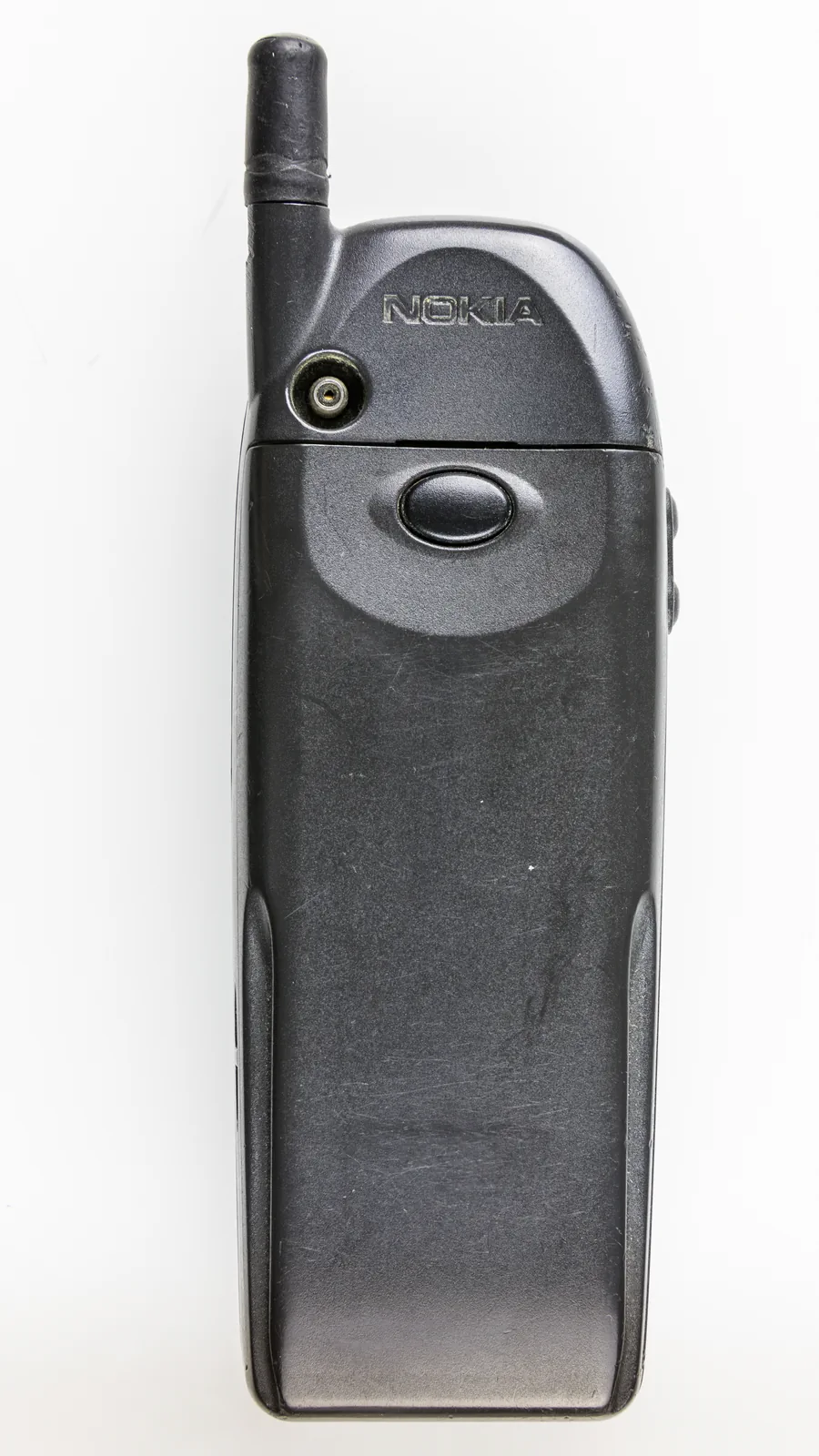
The top IR port requires clear alignment, preferably within one metre, for transfers, compatible printing and games. A removable external battery covers the SIM; a separate bottom socket handles charging. The guide gives BLS-2 with ACP-7 at about four hours; the original Nokia accessory list specifies that named pack at 900 mAh. NiMH, lithium-ion and other battery options remain distinct. ITavisen’s sample was claimed at 137 g and measured at 139 g; endurance figures describe that contemporary unit.
Sources
- Nokia — original 1997 annual report, 10 November product-family announcement
- Nokia — original 1998 annual report, product chronology and February 1999 model table
- Nokia — original 6110 user guide, 9351506 Issue 2
- ITavisen / Telecom Revy — own Nokia 6110 test, 5 January 1998
- Digi — Frode Eriksen’s own launch-presentation report, 10 November 1997
- ITavisen / Dagens Telecom — own Mats Winblad interview, 10 November 1997
- Nokia — original NSE-3 UE4 UI Module, November 1997
- Nokia — original NSE-1 PAMS General Information, March 1998
Image credits
Blue-purple Nokia 6110 front, keypad and external antenna, full original frame — Raimond Spekking, CC BY-SA 4.0; source file unchanged by this archive.

Nokia 6110 rear battery, release catch and external-antenna connector with original wear — Raimond Spekking, CC BY-SA 4.0; source file unchanged by this archive.

Optimized display images on this page have been proportionally resized (maximum dimension 1600 px) and compressed to WebP, without cropping or retouching. Statements above about unchanged files refer to the preserved collected originals; attribution, sources and original licenses still apply. Originals: 1, 2.


Images collected from the Internet.